Three Romanian folk tales
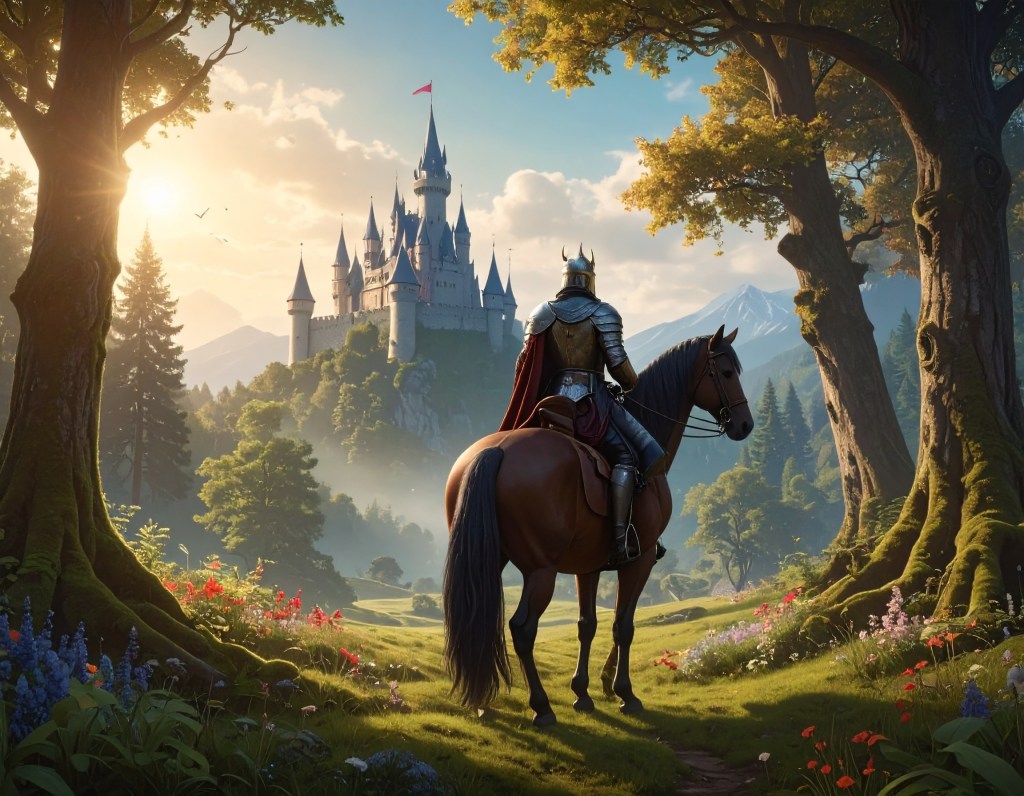
Once upon a time, there was a great and powerful Emperor who had beside his palace a most wonderful garden, rich with flowers and skilfully made. In all the wide world no garden like it had ever been seen. Deep within this garden grew an apple-tree that bore apples of pure gold. Yet though the Emperor longed for them, he had never tasted one ripe from the tree. For when the blossoms came and the fruit began to swell and ripen, someone would steal them in the night, just as they were ready.
All the watchmen and the bravest soldiers in the land kept guard, but none could catch the thief. At last the Emperor’s eldest son came to his father and said:
“Father, I have grown up in your palace and walked many times in this garden. I have seen the golden apples shining, but never have I tasted them. Now they ripen once more. Let me watch myself these nights, and I promise I shall catch the robber who steals from us.”
The Emperor answered sadly, “My son, many strong men have watched and none have succeeded. Yet I desire one of those apples so greatly that I will let you try, though I have little hope.”
So the eldest son watched for a whole week. By night he kept vigil, and by day he rested. But one morning he returned sorrowful and told how sleep had overcome him towards dawn, and when he awoke the apples were gone.
Great was the Emperor’s grief. Still, out of pity for his second son, he waited another year. The second son watched also, but fared no better than his brother.
Then the Emperor, in despair, resolved to cut down the tree. But the youngest son, whose name was Prâslea, came humbly before him and said:
“Father, you have kept this tree so many years and suffered much on account of it. Pray let it stand one year more, that I too may try my fortune.”
“Go away, foolish boy,” said the Emperor. “Your elder brothers, grown men and trained in arms, could do nothing. How then should a mere child succeed? There must be magic at work here.”
“I do not boast that I will catch the thief,” replied Prâslea. “I only ask leave to make the trial. No harm can come of it.”
The Emperor relented and spared the tree another year.
When spring returned the apple-tree flowered more beautifully than ever and bore a greater burden of fruit. The Emperor rejoiced to see it, yet his heart was heavy, fearing the apples would be stolen again. Prâslea often walked round the tree, thinking deeply.
At last, when the fruit began to ripen, he said, “Father, the time has come. I go to watch.”
“Go then,” said the Emperor, “but you will come back ashamed, like your brothers.”
“The shame will not be so great for me,” answered Prâslea, “for I am the youngest and make no proud vows. I only wish to try.”
That evening he took with him some books to read, two sharp stakes, his bow, and a quiver of arrows. He chose a corner close by the tree, drove the stakes into the ground, and stood between them, so that if sleep should come upon him and his head nod forward, his beard would strike the front stake, and if it fell backward, the back of his head would strike the other.
Thus he watched. One night, long after midnight, the soft breath of dawn stole over him, sweet-scented and drowsy. Sleep weighed heavy on his eyes, but every time he nodded the stakes woke him. He remained steadfast until, just as the sky began to lighten, a soft rustling was heard in the garden. Prâslea fitted an arrow to his bow and waited. The rustling grew louder. A figure reached up among the branches. He shot once, twice, and at the third arrow a groan sounded, then all was still as death.
When it grew light, he gathered some of the golden apples, laid them on a golden dish, and carried them to his father.
Never had the Emperor felt such joy as when he saw and touched those apples he had never tasted.
“Now,” said Prâslea, “let us find the thief as well.”
But the Emperor, content with the apples, cared no more about the thief. Prâslea, however, would not rest. He showed his father the trail of blood left by the wounded robber and declared he would follow it even to the serpent’s hole. The next day he set out with his brothers.
They followed the blood-trail far across wild country until they came to a deep chasm where the trail ended. They understood that the thief’s dwelling must lie below.
They made ready thick ropes and a windlass. The eldest brother went down first, saying he would shake the rope when he wished to be drawn up. Soon he shook it and was pulled back. The second brother went down a little farther and did the same.
“Now it is my turn,” said Prâslea. “When I shake the rope, lower me still more. When it hangs slack, keep watch, and when it strikes the sides again, draw me up.”
They lowered him deeper and deeper until the rope hung loose with nothing upon it.
Then the elder brothers took counsel together and said, “Whether he succeeds or fails, we shall be rid of him, for he puts us to shame.”
Prâslea reached the underworld and looked about him in wonder. The land, the flowers, the trees, and all the creatures were strange and unlike those above. He took a path and came at length to a palace made all of copper. A fair maiden met him at the door.
“Blessed be God that I see a man from the upper world!” she cried. “How came you here, brother? This is the land of three dragon-brothers who stole us from our parents. We are three sisters, daughters of an Emperor like your own.”
Prâslea told her his story and asked about the dragons. Each had chosen one of the sisters for his wife, but the maidens had resisted with clever words. The dragons were mighty, yet with God’s help they might be overcome.
The maiden hid Prâslea just in time, for the eldest dragon was coming. He had the habit of throwing his heavy mace a great distance so that it struck the door, the table, and hung itself upon its hook. When the mace came whistling, Prâslea seized it and hurled it back farther than the dragon had thrown it, striking him on the shoulder.
The dragon returned in anger. They fought first with maces, then with swords, and at last in wrestling. The dragon drove Prâslea into the earth up to his ankles, but Prâslea gathered all his strength, lifted the dragon high, slammed him down up to his knees, and cut off his head.
The maiden thanked him with tears and begged him to rescue her sisters also.
After resting, Prâslea went to the silver palace and slew the second dragon in the same manner. Then, after a week of gladness with the two maidens, he set out for the golden palace of the youngest and strongest dragon.
There the youngest maiden implored his help. When the dragon’s mace came, Prâslea threw it back with greater force. They fought from noon till evening, sometimes as men, sometimes as living flames, while a raven circled overhead. The dragon and Prâslea each promised the raven rich reward. The raven brought fat to Prâslea, and the maiden gave the hero water. Thus strengthened, Prâslea lifted the dragon high and drove him deep into the earth up to his throat, then struck off his head.
The three maidens rejoiced and called him brother. In each palace was a magic whip; when it was cracked in the four corners the palace became a golden apple. Each maiden took one. Then they returned to the chasm and shook the rope.
The guards above drew up the eldest maiden with her copper apple, and she showed a letter saying she was to wed Prâslea’s eldest brother. In the same way the second maiden was drawn up with her silver apple for the middle brother.
When the rope came down again, Prâslea tied a heavy stone to it, placed his cap on top, and let them draw it up. Seeing the cap, the brothers believed it was their youngest brother and cut the rope, letting it fall.
They took the maidens to the Emperor, pretending sorrow that Prâslea had perished, and married the two elder sisters as he had arranged. But the youngest maiden, who was promised to Prâslea, dressed in black and would marry no one.
Meanwhile Prâslea, left below, thanked God he yet lived and wondered how he might return. Hearing a cry, he saw a dragon climbing a tree to devour the young of a great griffin. He drew his sword and slew the dragon.
The grateful young griffins hid him under a feather. When their mother returned, they told her what had happened. In joy she nearly swallowed Prâslea, but her children protected him.
“What reward would you have?” she asked.
“Carry me back to the upper world,” said Prâslea.
“That is no light thing,” replied the griffin, “but because you saved my children, I will do it. Prepare a hundred pounds of meat cut into pieces of one pound each, and a hundred loaves of bread.”
When all was ready, Prâslea sat upon the griffin’s back. Each time she turned her head he gave her bread and meat. As they neared the upper world the meat failed. Without hesitation Prâslea cut a piece of flesh from his own thigh and gave it to her.
When they reached the surface and she saw he could not walk, she said, “Had it not been for the good you did my children, I would have eaten you. I knew the last piece was sweeter, yet I did not swallow it.” She replaced the flesh, spat upon the wound, and it healed.
They embraced, thanked each other, and parted.
Prâslea returned to his father’s city dressed as a poor peasant. From travellers he learned that his brothers had married the two elder maidens, that his parents mourned him, and that the youngest maiden refused every suitor and was being forced into marriage.
Sorrow filled his heart. He went to the city and learned that the maiden had asked for a golden distaff, spindle, and roving that would spin by itself. The Emperor had threatened the master silversmith with death if he did not make it in three weeks. The poor craftsman wept at home.
Prâslea became his apprentice. When only three days remained, he asked to try. The silversmith mocked him at first, but agreed. Each night Prâslea was given nuts and good wine. On the third morning he brought forth the golden distaff that spun by itself. The Emperor rejoiced and rewarded the silversmith richly.
When the maiden saw it, she knew. She asked next for a golden hen with chicks that would cluck and peck golden millet. Again Prâslea made it. Then she begged that the true craftsman be brought before her.
After some delay the silversmith brought Prâslea, washed and newly clothed, before the Emperor and the maiden. She knew him at once, wept for joy, knelt, and kissed his hands. The Emperor also recognised his youngest son. He embraced him many times.
At last Prâslea told the whole story and showed the golden apple of the youngest dragon.
The Emperor, angry, summoned his elder sons, but they fled at the sight of Prâslea. When he asked how they should be punished, Prâslea said, “Father, I forgive them. Let God judge.”
They went out before the palace, each shot an arrow into the sky, and said that God would punish the guilty. The arrows of the two elder brothers fell back upon their own heads and killed them. Prâslea’s arrow fell harmlessly before him.
They buried the elder brothers, held a great wedding, and Prâslea married the youngest maiden. All the empire rejoiced. After his father’s death Prâslea sat upon the throne and ruled long and justly.
And so the tale ends, as all good tales should, with joy and peace.

 Isle of Nines
Leave a comment