Mircea Eliade, one of the most influential historians of religion, viewed “rituals of initiation” as fundamental moments in human religious experience. In “The Sacred and the Profane”, as well as in his works on mythology and initiation (“Rites and Symbols of Initiation”, “Shamanism: Archaic Techniques of Ecstasy”), Eliade shows that initiation is “more than a social transition“—it is a transformation of being, a journey from the profane to the sacred.
For Eliade, “initiation is the process through which humans enter the realm of the sacred“, mirroring the cosmic and mythological structures that define reality itself. It is “a re-enactment of primordial events“, a passage from chaos to order, from childhood to adulthood, from mortality to immortality.
This article explores how Eliade interprets “initiation rituals across cultures“, emphasizing the “symbolism of death and rebirth, cosmic structures, trials, and final transformation“.
The Meaning of Initiation: Entering the Sacred
Eliade describes initiation as “a radical change in the existential condition” of an individual. It is “not just a ceremony but a complete restructuring of the self“, often associated with myths that recount the transformations of gods, heroes, or shamans.
“Initiatory death is the condition sine qua non of the transition to a truly human existence.”
Throughout history, initiation has taken many forms:
- Puberty rites, where children symbolically die and are reborn as adults.
- Mystery religions, such as the Eleusinian or Orphic mysteries, where the initiate reenacts the journey of the gods.
- Shamanic initiations, where the apprentice undergoes physical and spiritual trials to become a mediator between worlds.
- Monastic and mystical initiations, where renouncing the world is part of achieving union with the divine.
Despite their diversity, all initiations share a common “pattern of death, transition, and rebirth“.
Symbolic Death and Descent into the Underworld
One of the key aspects of initiation is the “symbolic death of the initiate“. This theme is nearly universal, appearing in tribal rites, ancient mystery religions, and even monastic traditions.
In many tribal societies, initiates are “secluded from their communities“, sometimes confined to special huts, caves, or underground chambers. These spaces are symbolic “wombs” where the initiates will “die to their former selves” before emerging anew.
For example, among the Australian Aboriginals, young men undergoing initiation are “laid on the ground as if dead“, covered with leaves, and subjected to painful trials that symbolize dismemberment. In some traditions, they are told that “the spirits will devour them and reconstruct their bodies“, marking their transformation into full members of the sacred world.
Similarly, among the Plains Indians of North America, initiates often undergo a period of isolation, fasting, and exposure to extreme conditions, believed to break their connection to ordinary existence and “prepare them for visionary experiences“.
Eliade draws parallels between these initiatory deaths and the “descent of heroes into the underworld“. He writes:
“The myth of descent to the underworld is found in innumerable traditions, and always signifies the same thing: a passage beyond ordinary human existence.”
Figures like Orpheus, Gilgamesh, and Aeneas all journey into the depths before emerging transformed. The same idea is reflected in Christian baptism, where the immersion in water symbolizes “death to sin and rebirth into a new spiritual life“.
The Initiation Hut as the Cosmic Womb
Eliade connects the “architectural space of initiation” with cosmic symbolism. Many initiation rites occur within enclosed spaces—huts, caves, underground chambers—which represent “both the grave and the womb“.
Among the Bantu of Africa, for example, the initiation hut is called “the mother’s womb“, and the initiates inside it are considered embryos. Their emergence at the end of the ritual is seen as “a second birth“, one that grants them access to the sacred knowledge of adulthood.
Similarly, in Eleusinian mysteries, initiates enter “dark subterranean chambers“, reenacting the descent of Persephone into the underworld. Their emergence into the light symbolizes “spiritual enlightenment“, an understanding of the divine cycle of life, death, and rebirth.
“The sacred dwelling is always an image of the cosmos.”
Eliade explains that these spaces represent “the center of the world“, the place where transformation occurs. By passing through them, the initiate “repeats the creation of the world itself“, mirroring the “primordial emergence of order from chaos”.
The Trial: Overcoming Fear and Pain
Before rebirth can occur, the initiate must face “a dangerous trial“—a physical or spiritual ordeal that tests their readiness to enter the sacred. These trials often include:
- Physical suffering (scarification, circumcision, fasting).
- Psychological fear(confrontation with spirits, isolation in darkness).
- Symbolic combat (fighting an elder, wrestling a spirit).
In Siberian shamanic initiation, for example, the apprentice shaman is believed to be “dismembered by spirits“, their flesh torn apart, and their bones counted before they are reassembled. Eliade describes this as a “necessary destruction of the profane self“, a way to ensure that only those truly prepared will gain sacred power.
Among the Maasai of East Africa, young warriors must endure circumcision “without showing pain“—a demonstration of their readiness to leave behind childhood and enter the world of men.
“To endure suffering is to prove that one is worthy of the sacred.”
These trials are not punishments but “”means of purification””, burning away the old self so that a new, sacred being can emerge.
Crossing the Final Threshold
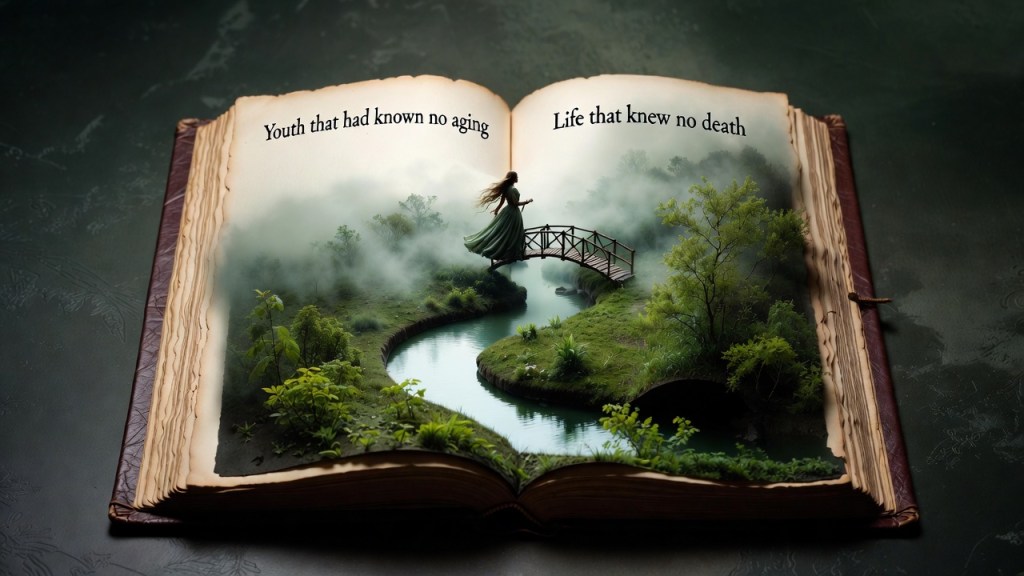
A crucial moment in initiation is the “final crossing—a threshold that separates the old life from the new“. This crossing often takes the form of:
- bridge that only the worthy can cross.
- narrow passage, symbolizing the difficulty of attaining enlightenment.
- trial by fire, water, or darkness, representing the unknown dangers of the sacred.
In Zoroastrian mythology, the dead must cross the Cinvat Bridge, which is as wide as a highway for the just but razor-thin for the wicked. A similar idea appears in Islamic eschatology, where souls must cross a bridge finer than a hair to reach paradise.
In initiation, crossing such thresholds is a ‘test of transformation‘—the final proof that the initiate has left their old identity behind.
“The passage beyond conditioned existence is always marked by danger, by a breaking of limits.”
This is why monks, mystics, and shamans often undergo a final “separation from ordinary life“, leaving their homes to live in forests, mountains, or monasteries. “The final proof of initiation is the renunciation of the profane world.”
Conclusion: Initiation as a Universal Human Experience
Eliade’s study of initiation reveals that “rituals of transformation are central to human religious experience“. The journey from the profane to the sacred follows a universal structure:
1. Separation from ordinary existence.
2. Symbolic death and descent into the underworld.
3. Rebirth through a cosmic womb.
4. Trials that purify and test the initiate.
5. Crossing the final threshold into the sacred.
This pattern is found in “tribal initiations, ancient mystery religions, shamanic rites, and mystical traditions“. Even in modern times, echoes of initiation remain in religious sacraments, coming-of-age ceremonies, and personal spiritual awakenings.
To be initiated is to be “reborn into the sacred“, to leave behind the limitations of ordinary existence and “enter a world where the divine is present“.


 Isle of Nines
Leave a comment